Monday, May 23, 2011

Visiting in Znojmo

If Znojmo (pronounced ZNO-yee-mo) were located anywhere in the United States, it would receive millions of visitors every year. Its gothic cathedral, town tower, and picturesque squares would be plastered on postcards, calendars, and tourist brochures. Situated in Southern Moravia, near the Austrian border, this little city does entertain thousands of visitors each year; Annette and I recently added to that number when we went to visit our friends Jarek and Ema Chudobovi. We have included some pictures of the town in this post. The main reason for our visit was that I had been invited by Jarek and the other elders in his church to preach one Sunday in April.

We really enjoyed our time with Jarek, Ema, and their little daughter Anežka. In many ways, their struggles and joys would be familiar to any young Christian family trying to live out their faith in a secular culture. One thing that makes Ema and Jarek a bit unusual is that they have several close relatives who are also Christians. Most evangelical Czech Christians we know are first generation Christians with few, if any, other Christians in their families. So, most evangelical Christians here have grown up without the benefit of the example of Christian parents, without the understanding of church life that comes from being raised in a church, and without the solid foundation in God’s word that comes from years of learning in Sunday school. As a result of these disadvantages, evangelical churches often struggle to deal with parenting issues and marriage problems.

So, it was no surprise when Jarek asked me to preach on some topic related to marriage. I was encouraged by the Spirit to speak from Jesus’ parable of the unforgiving servant in Matthew 18. God was gracious and helped me deliver a simple message about how God’s forgiveness of us empowers us to forgive. After church, we enjoyed lunch with our hosts and another young couple from their church who work as shepherds.

Please continue to pray for Czech Christians, and especially for their pastors. They are fighting the same battles you are, but with a lot fewer resources.


Saturday, April 23, 2011

On a Bit of a Different Note....

Our visit to Edinburgh Scotland was so very encouraging. It is a beautiful city, and history lines the streets. The great song writer, Horatius Bonar is buried there at the Cannongate Kirk. We visited the Grassmarket, and Greyfriar’s Kirkyard to see the Covenanter Monuments. Johnny traveled to Dundee to visit the Church where Robert Murray M'Cheyne preached. Part of the conference was held there.

 Chaplins and Johnsons at the Castle

During the conference Johnny was able to spend valuable time with many of the men who have so much practical experience planting churches. We both were encouraged by our time with Carl and Becky Chaplin. They were in the Czech Republic for many years before God called them to Latvia. We had a thousand questions for them about ministry and the way we see God leading us. We were encouraged by the many ways God is using them in Riga, Latvia. Oh, last but certainly not least, they speak English in Scotland. I can appreciate that!
 Monument in the Grassmarket
Covenanter Monument in Greyfriar's Kirkyard

 
There is lots of great information on the Spiritual History of the Royal Mile at the following web site. http://theroyalmile.org.uk/reformation.html


Thursday, April 21, 2011

Mission to the World in Europe

Statue of John Knox

We attended a conference in Scotland last month at which most of the MTW teams in Europe were represented. It was very encouraging to hear about the different ways God is working in such varied cultures as Greece, Bulgaria, Latvia, Scotland, and Germany. Although these cultures are widely separated by language, history, and tradition, they share much in common spiritually. They are all places in which Christianity has been more prominent at some period in the past. Today, only a very small minority in each of these countries has any interest in Christ and his kingdom. Like the Czech Republic, several countries where MTW is working today were dramatically affected by National Socialism and Communism. During the long period of moral scorched-earth policies in the 20th century, the Eastern European conscience was purged of gospel ideas and is still largely sterile today. Freedom has returned, but to an empty house.


The messages at the conference were delivered by Neil Macmillan, mission development officer for the Free Church of Scotland. Neil spoke about rebuilding the temple from the book of Haggai and applied that to rebuilding the church and our personal lives. Although the church in Europe is a faint shadow of what it was in former times, it is nonetheless God’s church and we must give careful attention to it. Just as God was very interested in the smaller, less-glorious temple that was being built in Haggai’s day, he is very interested in the struggling European church that is emerging from the ashes of physical and spiritual warfare in this part of the world.

Velikonoce (Easter)

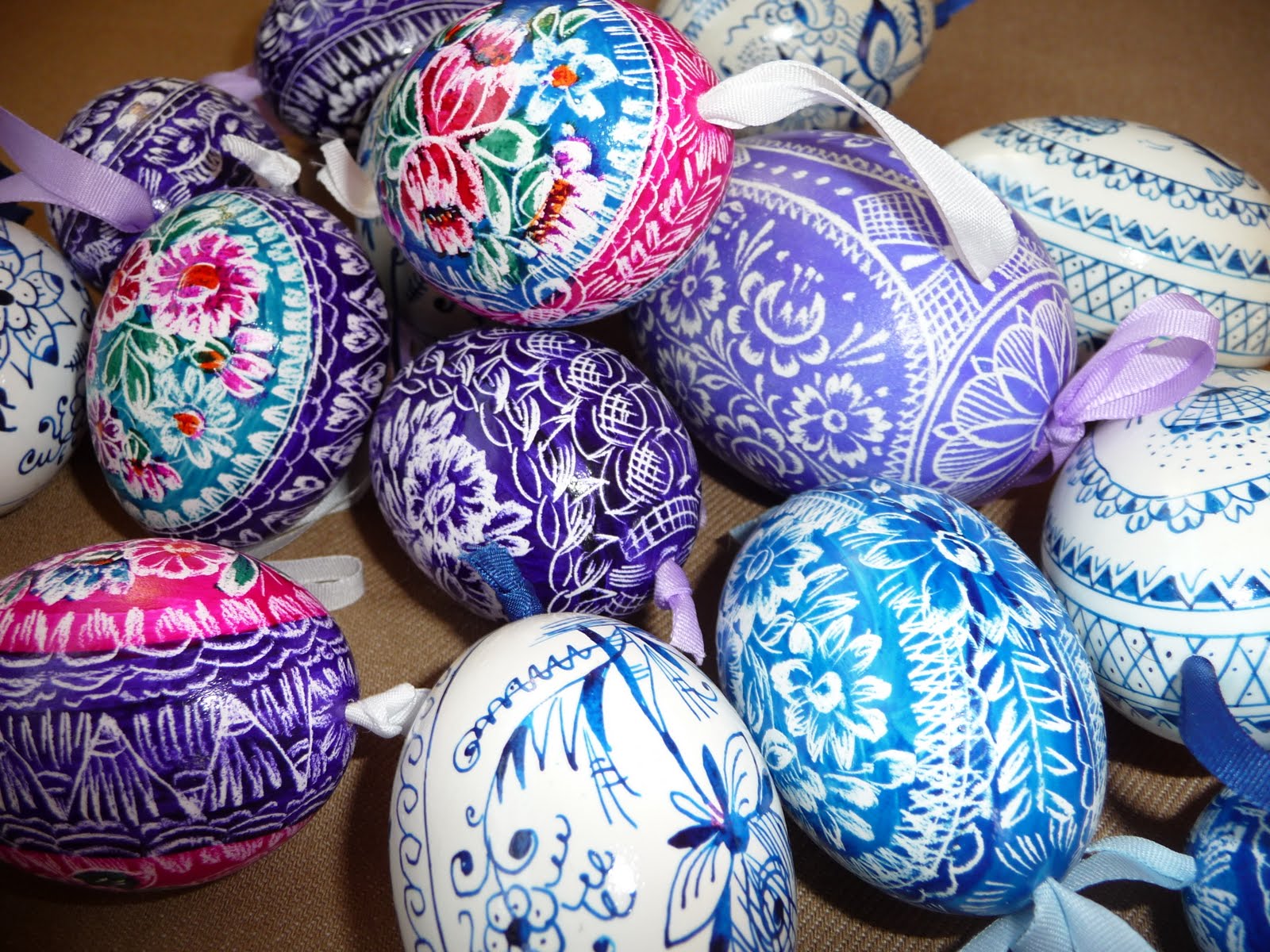
Easter is a major holiday in the Czech Republic, but not because it is a religious one. Under communism the holiday was one of welcoming spring. It seems to us that little has changed in that regard. The decorations, candy eggs, Easter arrangements with chicks and lambs, and special baking molds for traditional Easter cakes shaped like lambs have filled the stores for over a month. On Ugly Wednesday or as they would say in Czech, Škaredá středa, the traditional Easter market arrived in the Zlín square. The market is filled with booths offering traditional Czech crafts of pottery, glass, jewelry, candles, and the beautiful hand decorated Easter eggs, called kraslice. The food booths are the ones that seem to be the busiest. They sell potato pancakes, sausages, mulled wine, beer, cheese and - seemingly everyone’s favorite - the Easter cukroví or sweets.

Every day of the week, except Tuesday, is given a specific name throughout the Easter week. There is Ugly Wednesday, and Green Thursday. On Thursday, we are told that traditionally the boys walk through the village with homemade rattles to chase away Judas. I read that this is to be repeated on Good Friday. They are to go again on White Saturday, only this time they stop at the houses and rattle until they collect money. Easter Sunday seems to be mainly a day to prepare the eggs and to make the pomlázkas.

A pomlázka is made by twisting or braiding together pussy willow branches. Colorful ribbons are tied on the end, although we are not sure why. It is thought that they will bring health and youth to anyone who is whipped with them.

Easter Monday is a very big deal. On that day, boys young and old go to visit friends, bringing, of course, their pomlázka to whip the women. Sometimes they are required to say an Easter poem before they are rewarded with eggs and candy. Frequently the men are rewarded with a drink of slivovice, a potent plum brandy. Our friend René says that it is a good day to go visit friends and family.

The Czech name for Easter is Velikonoce, which comes from the words great night. Truly, for those who believe in Christ, Easter was a great night indeed - the greatest of all nights. For on Good Friday Christ suffered and died so that the wrath of God against sin would be appeased and the righteousness of God upheld. But on the great night of waiting, on the third day, Romans 4:25 says, Jesus was “raised for our justification.” This Christ did so that the righteousness of God might be revealed. We have great cause to rejoice in the One who died for us and for our salvation. In spite of all our rebellion, in spite of loving, delighting and longing after everything more than God, He by grace through faith declares all those who believe to be the righteousness of God in Christ. His great grace causes my heart to rejoice! Hallelujah, what a Savior!

Veselé Velikonoce!